Europe now has a carbon storage site that is open for business.
On September 18, King Frederik X of Denmark formally opened Greensand at the Port of Esbjerg. The opening marked the start of commercial operations at what INEOS Energy describes as the European Union’s first full-scale CO₂ storage site. INEOS Energy leads the project with Harbour Energy and the Danish North Sea Fund (Nordsøfonden). It will initially store up to 400,000 tonnes of CO₂ per year in the depleted Nini West oil field, about 250 kilometres offshore and 1,800 metres below the seabed.
INEOS chairman Sir Jim Ratcliffe was blunt about what had changed: “This is not a pilot project, a concept or a political ambition. It is a fully operational carbon transport and storage business.”
Canadian developers building storage hubs of their own should look closely at how the Danish project got here.
Every Link in the Chain Now Works
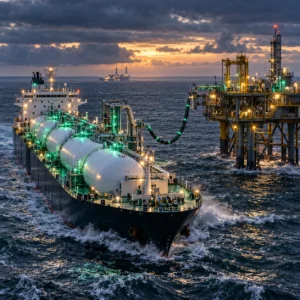
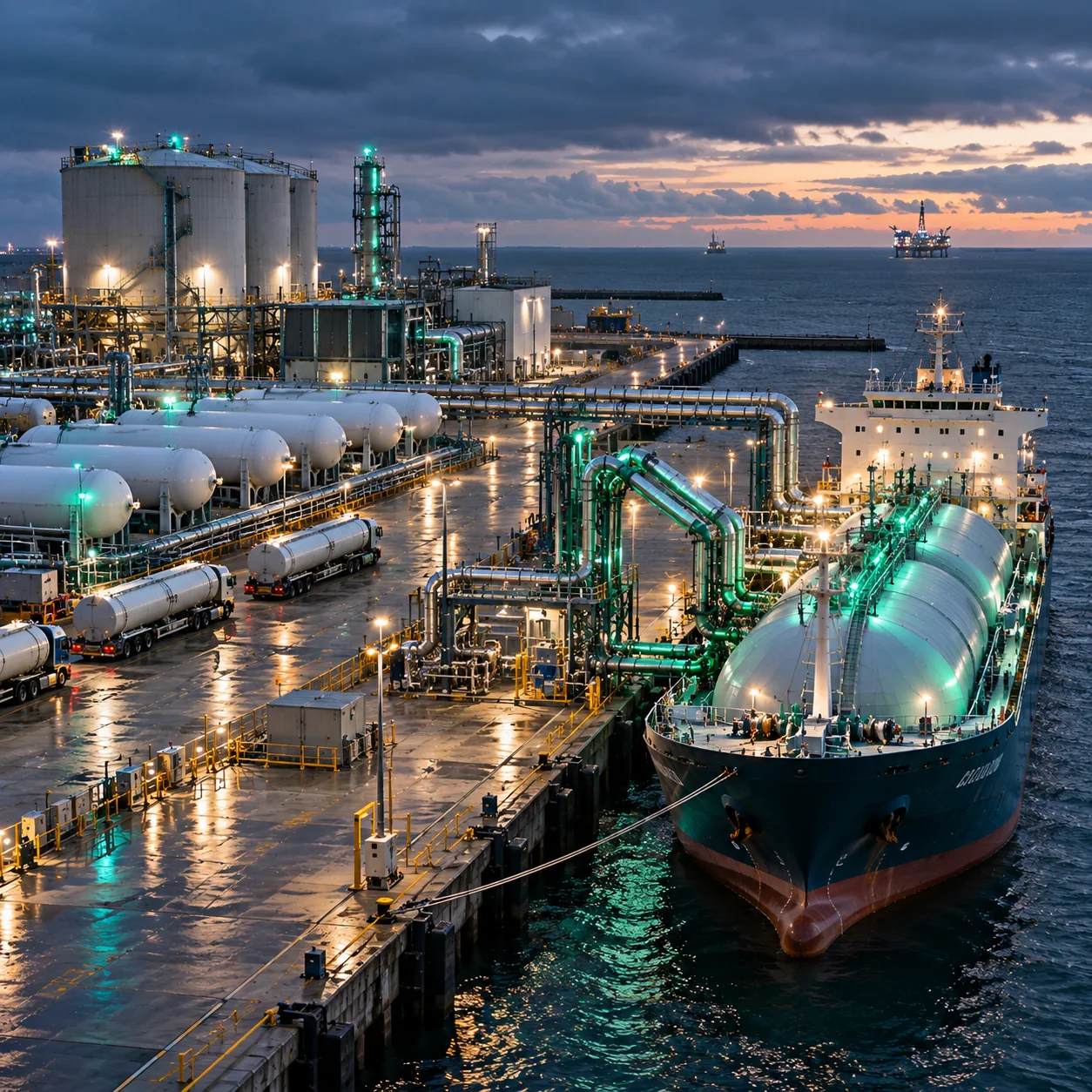
Greensand is a complete value chain, not a standalone well. CO₂ from Danish biomethane plants is liquefied and trucked to a dedicated terminal in Esbjerg. From there, Carbon Destroyer 1, which INEOS describes as Europe’s first purpose-built CO₂ carrier, ships it offshore for injection into the Nini West reservoir.
According to the EU’s Climate, Infrastructure and Environment Executive Agency (CINEA), the project aims to store about 2.4 million tonnes of CO₂ over eight years. It received a €41 million grant from the EU Innovation Fund, which is paid for with revenue from the EU Emissions Trading System.
Before any of that could happen, the project needed outside sign-off. The classification society DNV approved it for safety, and the Geological Survey of Denmark and Greenland verified the geology.
Each of those pieces had to be in place before the first commercial tonne could move.
Ships Turn a Storage Site Into a Regional Service
Greensand’s most important design choice is its transport model. Moving CO₂ by truck and ship lets the site take volumes from emitters that will never sit on a dedicated pipeline. That suits small, scattered sources such as biomethane plants, and it lets CO₂ cross national borders.
Greensand already has an international customer. Swedish utility Öresundskraft has agreed to store 210,000 tonnes of CO₂ a year starting in 2028. Over time, the partners expect the site to take CO₂ from industrial emitters across Europe.
With this model, emitters can sign up for storage capacity well before anyone builds a pipeline to them, because ships can carry the CO₂ in the meantime.
Depleted Fields Shorten the Road to Injection
Reusing a depleted oil reservoir gave Greensand a head start. Decades of production data meant the geology was already well known when the project began. The timeline still took years. A pilot phase began injecting CO₂ in 2023 and was completed in September 2024. The European Commission approved the storage permit in November 2025, and commercial operations began in September 2026.
The project is designed to grow in stages. The partners say the site could expand to between 4 and 8 million tonnes per year as demand develops, subject to market conditions and regulatory approval.
Developers can add capacity once customers have signed contracts, without building for demand that may never come.
What Greensand Means for Canada’s Storage Hubs
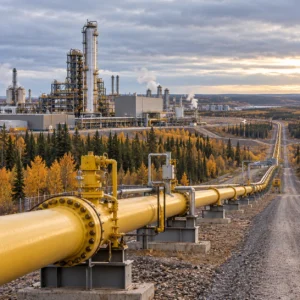
Canada is building storage differently, mainly through onshore hubs fed by pipelines. On September 9, Enhance Energy broke ground on its Origins CCS Hub near Clive, Alberta. The hub is expected to start operating in January 2027 and to store up to 1.5 million tonnes of CO₂ a year at the start, using the province’s existing CO₂ transportation network. Enhance’s existing Clive project has permanently stored more than 9 million tonnes since 2020.
The two regions start from different geology and infrastructure, but the commercial lessons carry over. For Canadian hub developers and their investors, Greensand points to several practical priorities:
- Sign anchor customers before expanding capacity
- Use public funding to reduce the risk of the first phase
- Get independent safety and geological verification early
- Add capacity in phases, matched to signed demand
- Plan transport options for small or remote emitters
- Treat the storage permit as a critical-path item
The last two points matter most for coastal emitters and distributed sources outside Alberta’s pipeline corridors. A shipping model will not suit every Canadian project, but it shows that storage access does not have to wait for a pipeline.
European CCS Moves From Targets to Tonnes
INEOS Energy CEO David Bucknall summed up the significance: “For years, CCS in Europe has been defined by plans, targets and ambitions. Today, Greensand brings the EU’s first full-scale CO2 storage site into operation.” European Commissioner for Energy and Housing Dan Jørgensen called the opening an important milestone for Europe, saying it shows that carbon storage is a practical reality.
Investors and emitters will now watch actual operating numbers: how many tonnes are injected, how reliably ships run, and how fast new storage contracts are signed. Those numbers will decide whether the planned expansion to several million tonnes a year goes ahead.
Greensand’s first phase is small by global standards. What matters is that it is running, and every storage hub that follows now has an operating example to measure itself against.