Carbon removal buyers have a new reference point, and it comes from Canada.
On September 3, Montreal-based Deep Sky announced that its Deep Sky One direct air capture (DAC) project had received an AAA-A Pre-Issuance Rating from Sylvera. According to Sylvera, this is the first pre-issuance rating the firm has issued for a DAC project.
Deep Sky One is not operating yet, and that is why the rating matters. Large DAC facilities need financing and offtake commitments years before they issue a single credit. Until now, buyers have had few independent ways to judge which projects deserve that early capital.
A pre-issuance rating is meant to fill that gap.
The Rating Grades Both the Tonne and the Delivery
Sylvera describes pre-issuance ratings as an independent evaluation of two things: the integrity of the carbon removals a project plans to deliver, and the project’s capacity to deliver them.
For Deep Sky One, the assessment covered carbon accounting, additionality and permanence, plus a separate review of delivery risk. Sylvera found low integrity risk overall and very low additionality risk, which it attributes to DAC’s dependence on carbon credit revenue. In practice, a DAC plant does not get built unless buyers pay for removal, so there is little doubt that the removals are additional.
The delivery half of the grade matters just as much. Integrity tells a buyer whether a tonne will be real. Delivery risk tells a buyer whether that tonne will actually arrive.
“For large-scale DAC projects, where significant investment and offtake decisions can be made years before a facility begins issuing credits, that provides an important early signal of project quality and delivery risk,” Sylvera says.
An Alberta Track Record Supports the Next Project
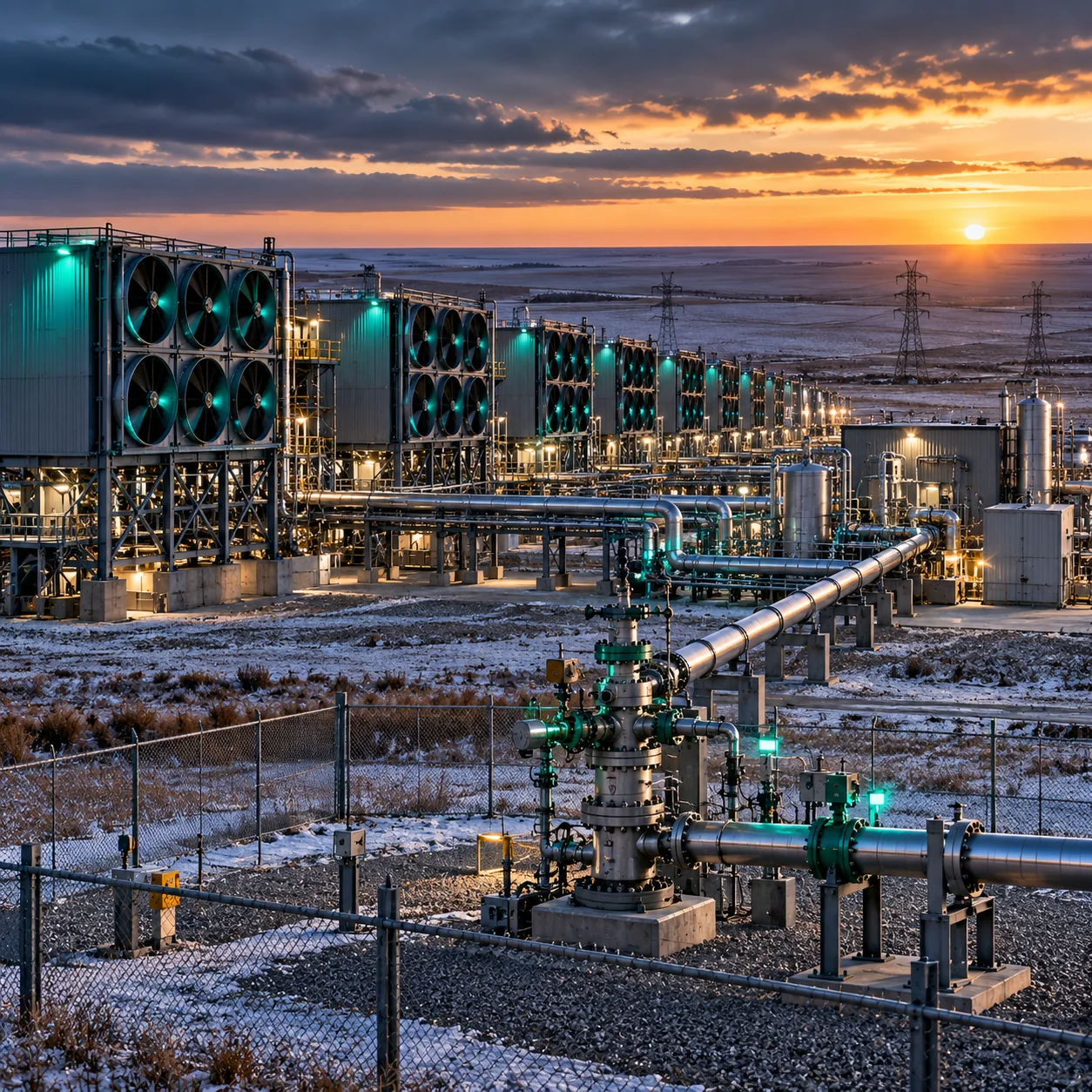
Deep Sky is not asking the market to take execution on faith. Its first site, Deep Sky Alpha in Innisfail, Alberta, delivered what the company describes as North America’s first certified DAC carbon removal credits. The company announced them in late June 2026. The credits were certified under Isometric’s Direct Air Capture Protocol and carry the Core Carbon Principles label. Microsoft and Royal Bank of Canada were among the buyers.
Deep Sky says the Alberta facility permanently injected its first tonnes of atmospheric CO₂ underground within 18 months of beginning construction.
Charlie Renzoni, VP of Carbon Markets at Deep Sky, linked the two projects directly. He said the company had already demonstrated at Deep Sky Alpha that it can move from project development to real-world delivery. The rating, he added, gives buyers and investors an independent view of both the quality of the project and the company’s ability to deliver at scale.
Deep Sky One is the company’s second facility. Sylvera calls it one of the largest DAC projects in development anywhere in the world.
Independent Ratings Address the DAC Financing Gap
DAC is capital intensive, and its revenue depends almost entirely on carbon removal credits. Deep Sky’s own figures show the scale involved. The company has announced a 500,000 tonne per year facility in southwestern Manitoba, to be built in phases, and it says the first 30,000 tonne phase alone represents more than $200 million in investment.
Lenders and offtakers weighing commitments of that size face two basic questions.
Will the plant be built and run as planned?
Will every tonne it sells hold up under scrutiny?
A pre-issuance rating answers both before the plant starts operating. That shortens buyer due diligence and gives corporate procurement teams a third-party view they can defend internally. Over time, it could also support offtake contracts that are signed earlier, priced more confidently and easier to finance.
Deep Sky already has strong capital behind it. Sylvera notes that the company is backed by $130 million from investors including Investissement Québec, BDC Climate Fund, Breakthrough Energy Catalyst, BMO and National Bank of Canada.
Carbon Removal Gives Canadian CCUS a Second Product
Most Canadian CCUS discussion centres on point-source capture: oil sands emissions, industrial clusters and the storage hubs being built to serve them. DAC adds a different product to the mix, durable removal credits sold to corporate and financial buyers around the world.
The country has the right foundations for it. It has deep saline storage geology, low-emission electricity in provinces such as Manitoba and Quebec, and a regulatory track record for CO₂ injection in Alberta. A credible rating framework adds a market layer on top of that physical advantage.
For developers following Deep Sky, the bar is now clearer. Buyers and raters are likely to look for:
- A storage pathway with permitted injection capacity
- Transparent accounting for energy inputs and lifecycle emissions
- Measurement, reporting and verification plans in place before operations
- Construction and commissioning milestones that can be tested
- Evidence of delivery from earlier or pilot facilities
- Offtake structures that reflect delivery risk
A Shared Standard Starts With a First Reference Point
Hugo Lakin, CDR Lead at Sylvera, framed the rating as an answer to a market problem. He described DAC as one of the most important tools for addressing legacy emissions, but said the market needs a shared standard for what a credible DAC project looks like. Sylvera’s work with Deep Sky, he said, gives the market a real reference point.
Other DAC projects will now be judged against that reference point. Buyers who have held back from long-dated contracts because they could not compare projects now have a benchmark. Developers who can show strong accounting and credible delivery plans will have an easier time raising capital.
That changes the competition.
DAC developers used to compete mainly on technology claims. Increasingly, they will compete on how well they can prove a tonne before it exists.
Deep Sky Alpha showed that Canadian DAC credits can be delivered. Deep Sky One now tests whether an independent grade can help finance them at scale.