Direct air capture has a new benchmark, and it comes from operating data rather than design targets.
On September 10, Climeworks reported that its Mammoth plant in Iceland delivered 675 tonnes of net carbon dioxide removal in the first half of 2026, up from 119 tonnes in the same period of 2025. The company also said it had cut operating costs per tonne by more than half.
The absolute numbers are small. The direction is not.
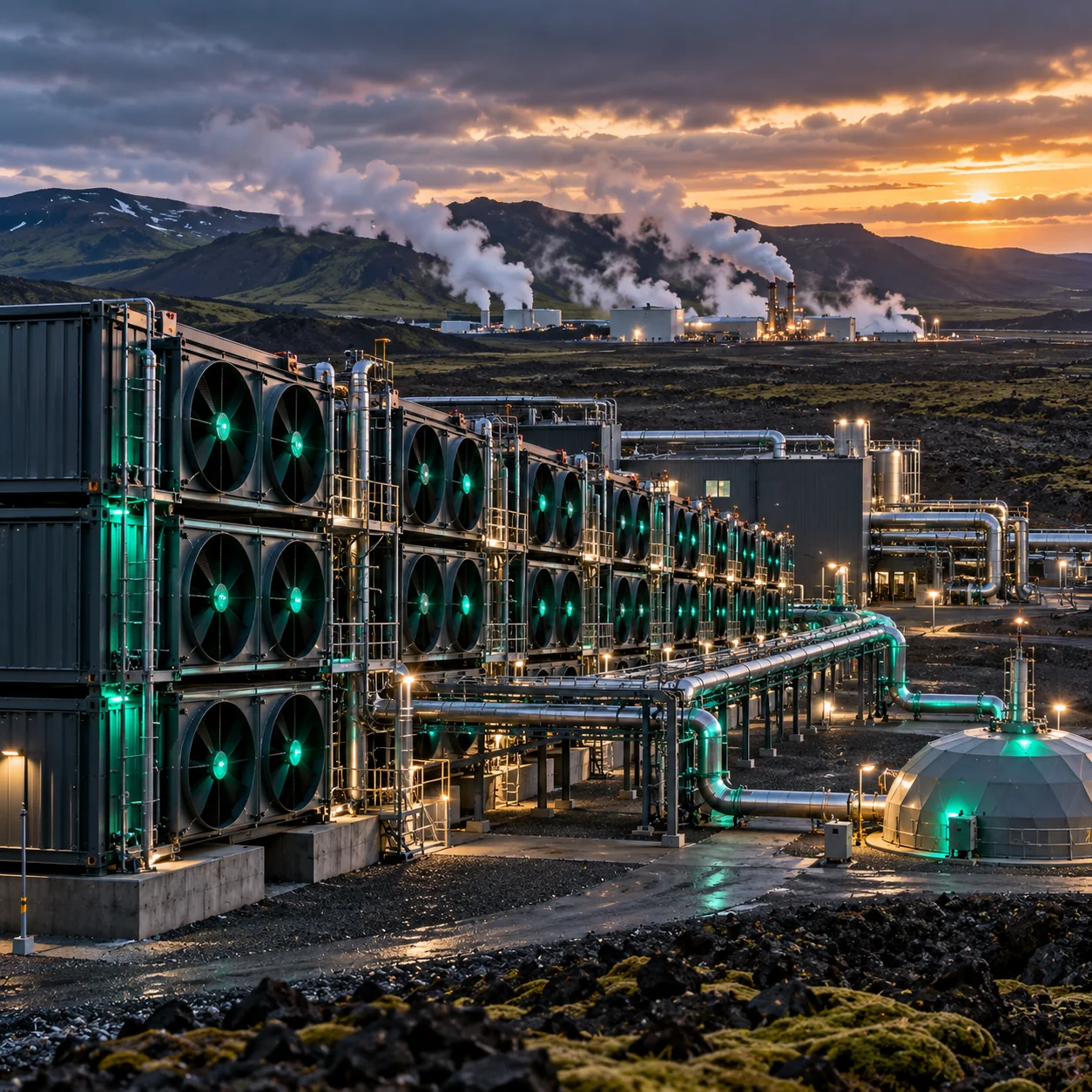
Mammoth is the largest operating direct air capture facility in the world, and since it started up in 2024 it has been the industry’s most closely watched test of whether air capture can perform at commercial scale. The update gives developers, buyers and policymakers something the sector has been short of: evidence that an operating plant can get much better over time.
The Gains Came From Upgrading Installed Equipment
Climeworks attributes the improvement to two sets of changes applied together. A refined sorbent formulation and production process raised how much CO₂ the filter material captures in real operating conditions. Mechanical and operational changes improved the reliability and efficiency of the equipment around it.
Two collector containers have run with both upgrades for more than six months. According to Climeworks, those containers reached the plant’s original design rates in real-world conditions for the first time, with a peak of 1.37 tonnes of CO₂ per day per container and a capacity factor of roughly 40 to 50 percent. In upgraded containers, capture performance has more than doubled.
The important detail is where this happened. The improvements were made to hardware that was already installed, in a working plant, in Iceland’s weather. That is a different kind of proof from a pilot rig or a lab result.
Climeworks plans to roll the new sorbent and mechanical upgrades out across all 12 collector containers in one Mammoth plant module by the end of 2026.
Performance Is Replacing Volume as the Measure That Counts
Co-founder and co-CEO Jan Wurzbacher has described a change in priorities since the plant was conceived. When Mammoth was planned, he said, the focus across the industry was on how to move “as fast as possible with as much volume as possible.” According to Carbon Herald, he said the focus has since moved from volume to performance.
Mammoth was designed for up to 36,000 tonnes of CO₂ a year across 72 planned containers. Set against that figure, the first-half result shows how much room the plant still has to grow. It also shows where that growth will come from: more output from each container already on site, at a lower cost per tonne, before any further capacity is added.
That reframes the questions investors and buyers should be asking of any air capture project:
How many net tonnes does each unit actually remove?
What does each of those tonnes cost to run?
Operating Cost Is the Number Carbon Removal Buyers Watch
Corporate buyers of durable carbon removal pay for delivered, verified tonnes. Nameplate capacity does not reach a registry. Net removal does.
Cutting operating cost per tonne by more than 50 percent in a single year goes straight at the main criticism of direct air capture, which is that it costs too much to scale. Mammoth sends its captured CO₂ to Carbfix, which stores it permanently underground in Iceland, so the gains apply to removal that is actually being delivered.
Competition in the sector is heating up. Bloomberg, reporting on the Climeworks update, said more than 100 direct air capture startups now exist, and BloombergNEF projects 4.5 million tonnes of annual capacity by 2035. In a market that size, the developers with real operating data will be best placed to win offtake contracts.
What Canadian Air Capture Developers Can Take From Mammoth
Canada already supports building direct air capture. Under the federal CCUS investment tax credit, eligible spending on direct air capture equipment qualifies for a 60 percent rate from 2022 through 2040, according to law firm MLT Aikins. That support lowers the cost of building a plant. Mammoth shows that operating performance largely sets the cost per tonne once the plant is running.
For developers planning air capture capacity in Alberta and elsewhere in Canada, the Mammoth results suggest several design and commercial priorities:
- Sorbent capacity and lifetime under local climate conditions
- Realistic capacity factors rather than nameplate output
- Collector designs that allow upgrades in the field
- Operating cost per net tonne as a core project metric
- Reliable access to permanent storage and verification
- Offtake contracts tied to delivered, measured removal
Plants that are designed to be upgraded can keep getting cheaper after construction. Plants that are not will stay at the cost they started with.
Mammoth Becomes a Proving Ground for the Next Generation
Climeworks also plans to begin testing its next generation of direct air capture technology at Mammoth in early 2027. The company says lab-scale work points to a tenfold improvement in sorbent lifetime and a fourfold improvement in process densification.
If those results carry over to field conditions, the plant’s role changes. Mammoth becomes the site where new materials and designs are tested in real conditions before they go into larger projects.
That makes the 2027 test programme the next milestone to watch.
Mammoth was built to prove direct air capture could be done. Its next job is proving it can be done well.