Twelve years in, Boundary Dam is still doing the work.
SaskPower reported on October 20, 2026 that the carbon capture and storage facility at its Boundary Dam Power Station near Estevan, Saskatchewan, captured 209,781 tonnes of CO₂ between July 1 and September 30. According to the utility, the facility was available 94.7% of the time during the quarter.
Those are not headline numbers in a sector that now talks in megatonnes. They matter for a different reason. Boundary Dam Unit 3 was the first power station in the world to use carbon capture and storage successfully, according to SaskPower, and every quarter it reports adds to the longest operating record Canada has for power sector CCS.
That record is becoming more valuable as the country moves from announcing capture projects to building them.
A Quarter Measured in Steady Daily Output
The detail in SaskPower’s Q3 update is worth reading closely. While online, the facility captured an average of 2,501 tonnes of CO₂ per day, with a peak single day of 2,852 tonnes. The unit’s emissions intensity over the quarter came in at 372 tonnes of CO₂ per gigawatt hour.
Availability is the figure operators care about most. A capture plant that performs well on paper but spends long stretches offline does little for emissions or for the economics of the host plant. At 94.7% availability, the Boundary Dam facility spent the large majority of the summer quarter running.
The quarter follows a strong end to 2025. SaskPower reported that the facility captured 232,826 tonnes in the fourth quarter of 2025 at 99.3% availability, and 721,239 tonnes across the full 2025 calendar year. By the end of 2025, the utility put cumulative capture since operations began in 2014 at 7,327,868 tonnes.
Summer is a harder season for any thermal plant. Higher ambient temperatures and grid demand put more strain on cooling and on equipment. Holding availability in the mid nineties through July, August and September is a sign of an operation that has learned its plant.
Why an Old Project Still Sets the Benchmark
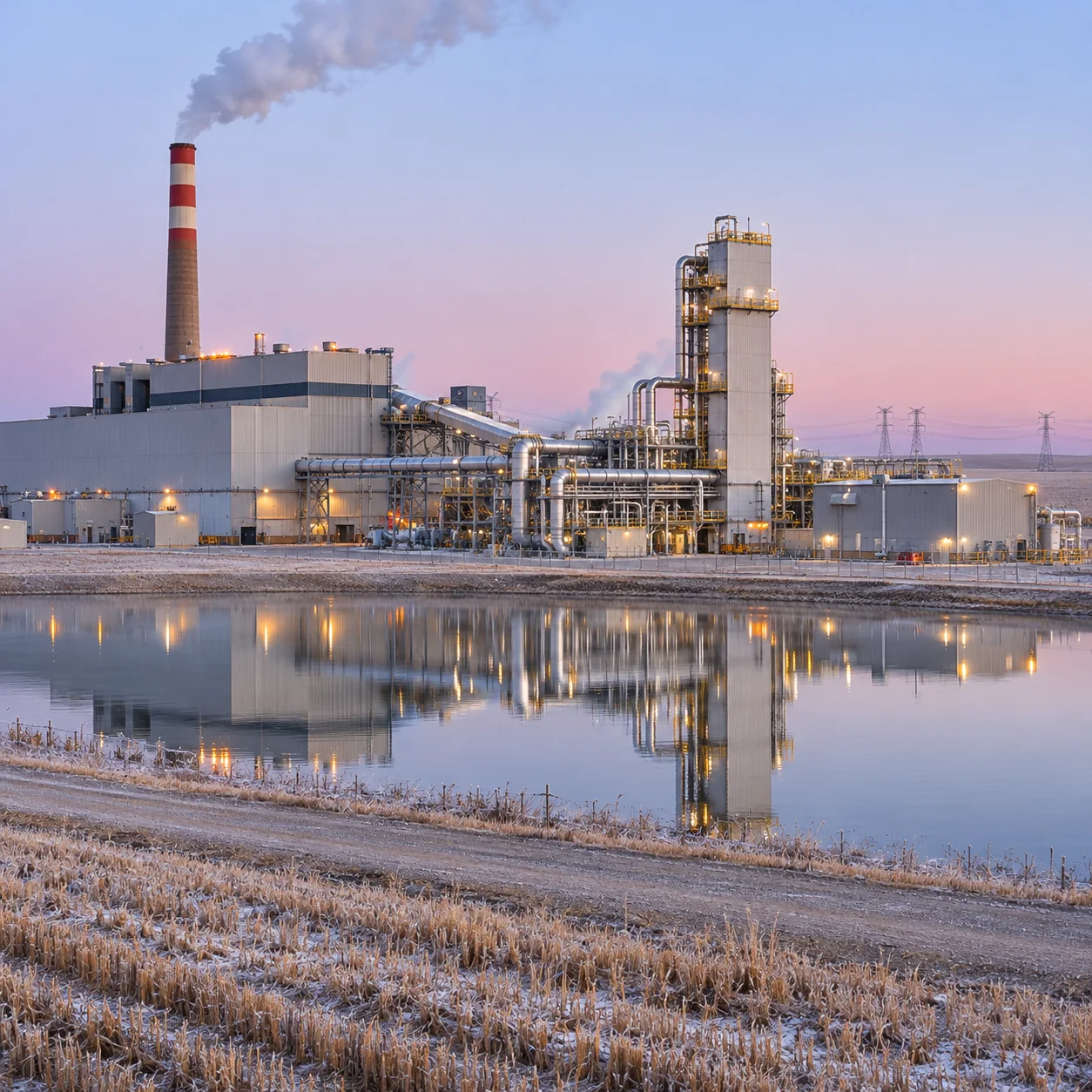
Boundary Dam Unit 3 is a 115 megawatt unit that SaskPower says can supply enough power for about 100,000 Saskatchewan homes. The utility describes it as the first power station in the world to successfully use carbon capture and storage when it came online in the fall of 2014, with a design capable of reducing CO₂ emissions from the unit by up to 90% and sulphur dioxide by up to 100%.
The project has drawn scrutiny over the years, as any first of its kind plant does. The recent quarterly results tell a story about what happens once an operator has had time to learn its plant.
That is the part of the CCS learning curve the industry has the least data on.
Most capture projects in Canada are still in engineering, construction or early operation. Developers, lenders and regulators are making decisions about solvent performance, maintenance cycles and availability assumptions with limited real operating history to draw on. Boundary Dam supplies more than a decade of it, from a cold prairie climate, on a combustion source with a demanding flue gas.
What the Numbers Mean for Projects Coming Next
Canada’s CCUS pipeline is larger now than at any point since Boundary Dam was built. Alberta hubs are moving toward injection, the federal investment tax credit is in place, and oil sands, cement, fertilizer and power developers are all working through front end engineering and investment decisions.
For each of those projects, the quarterly operating profile of an existing plant is practical evidence. It informs how much downtime to budget, how to size spares and maintenance crews, and what capture volumes a project can reasonably promise to offtakers, credit buyers or governments.
Several lessons from Boundary Dam’s recent performance apply across the sector:
- Availability, not nameplate capacity, drives the tonnes a project actually delivers.
- Operating experience compounds; later years can look very different from the first two or three.
- Daily average and peak capture data help set realistic contract volumes.
- Integration with the host plant matters as much as the capture technology itself.
- Transparent, regular reporting builds credibility with regulators and the public.
The last point deserves weight. SaskPower publishes a status update every quarter. That habit has turned a single project into a public dataset, and it gives investors something firmer than modelling to test assumptions against.
Saskatchewan’s Long Game on Thermal Power
The results also arrive as SaskPower plans the future of its thermal fleet. The utility says it is developing a plan to continue operating about 1,500 megawatts of coal-fired generation beyond 2030, following the Government of Saskatchewan’s energy security strategy and supply plan released in October 2025.
That makes the operating record at Unit 3 directly relevant to provincial planning. A utility weighing how to keep dispatchable generation on the grid while managing emissions now has twelve years of its own data on what capture costs to run, how reliably it performs and how it fits alongside a working power station.
Few utilities anywhere have that kind of internal evidence.
Proof Comes One Quarter at a Time
Carbon capture in Canada will ultimately be judged on how many tonnes stay out of the atmosphere, year after year, at a cost the economy can carry. Announcements and groundbreakings start that process. Operating reports like SaskPower’s continue it.
Is CCS on a power unit technically possible?
That question was settled years ago in Estevan. The more useful question now is how quickly new projects can match the availability the oldest one has learned to deliver.
Boundary Dam was built to prove a concept. Its job now is to show what consistency looks like.